

RTA Awards Contract for Phase I of Urban Walkways Master Plan in Historic Al Ras Under Dubai Walk
In line with the directives of the wise leadership to position Dubai as a pedestrian-friendly city year-round and deliver a step-change in the quality of walkways and pedestrian facilities across the emirate, Dubai’s Roads and Transport Authority (RTA) has awarded the contract for Phase I of Dubai Walk Master Plan in Al Ras.
The phase covers the development of the Historic Al Ras Walkway, comprising 12 km of walkways and 5 km of cycling tracks, alongside the rehabilitation of 10 artistic spaces in coordination with Dubai Culture and Arts Authority, with the participation of Emirati and local artists.
His Excellency Mattar Al Tayer, Director General, Chairman of the Board of Executive Directors of the Roads and Transport Authority, said: “The Pedestrian Master Plan plays a key role in strengthening Dubai’s global competitiveness in walkway infrastructure and soft mobility. It also advances a key objective of the Dubai Urban Plan 2040 — the 20-minute city — by providing the infrastructure required to enable residents to access more than 80% of essential services within a 20-minute journey.”
“The plan supports Dubai’s Quality of Life Strategy 2033 and contributes to enhancing community wellbeing by transforming Dubai into a pedestrian-friendly city, elevating pedestrian safety standards, and strengthening connectivity between various districts and the existing walkway network. It also integrates creative, aesthetic and cultural dimensions into soft mobility components, reinforces the distinctive identity of urban areas to enhance the emirate’s visual landscape, and contributes to the beautification of public spaces across Dubai.”
“It further strengthens collaboration with strategic partners in advancing creative elements within mobility infrastructure and facilities, while empowering youth and reflecting future mobility trends through their engagement in proposing innovative concepts for the design of walkways and associated amenities,” Al Tayer noted.
Improving Inter-District Connectivity
The Dubai Walk Pedestrian Master Plan includes the development of a comprehensive structural framework for an integrated, accessible walkway network that meets safety standards and provides a comfortable pedestrian environment. The plan covers the rollout of a walkway network across 160 areas, including the delivery and enhancement of 6,000 km of walkways across the emirate by 2040. It also provides for the construction of 110 pedestrian bridges and underpasses to strengthen connectivity between districts, with the aim of increasing the share of walking and soft mobility trips from 16% in 2025 to 25% by 2040.
Historic Al Ras Walkway
The Historic Al Ras Walkway project includes the development of 12 km of walkways and 5 km of cycling tracks. The walkway will connect key heritage landmarks across the area, most notably Al Ahmadiya School, Sheikh Saeed Al Maktoum House, Al Ras Public Library, Al Fahidi Fort, and Al Shindagha Historic District. It will also be integrated with public transport, including 11 metro, public bus and marine transport stations, to enhance first- and last-mile journeys, encourage residents and visitors to use public transport, and provide a distinctive mobility experience across the area.
The project covers the enhancement of internal walkways and the waterfront walkway through simplified urban design solutions that preserve the historic character of the area. The scope includes widening pedestrian pavements, introducing shading structures, providing seating areas, expanding green spaces, and implementing wayfinding systems designed in harmony with the district’s heritage context.
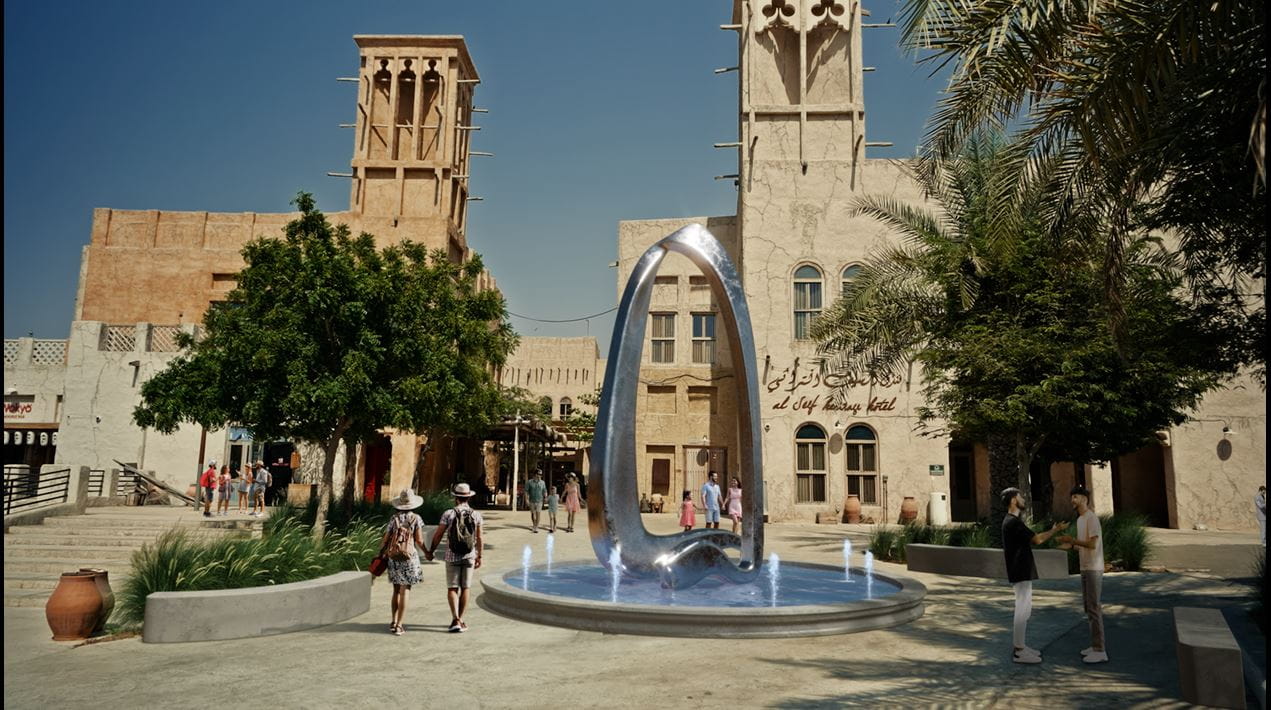
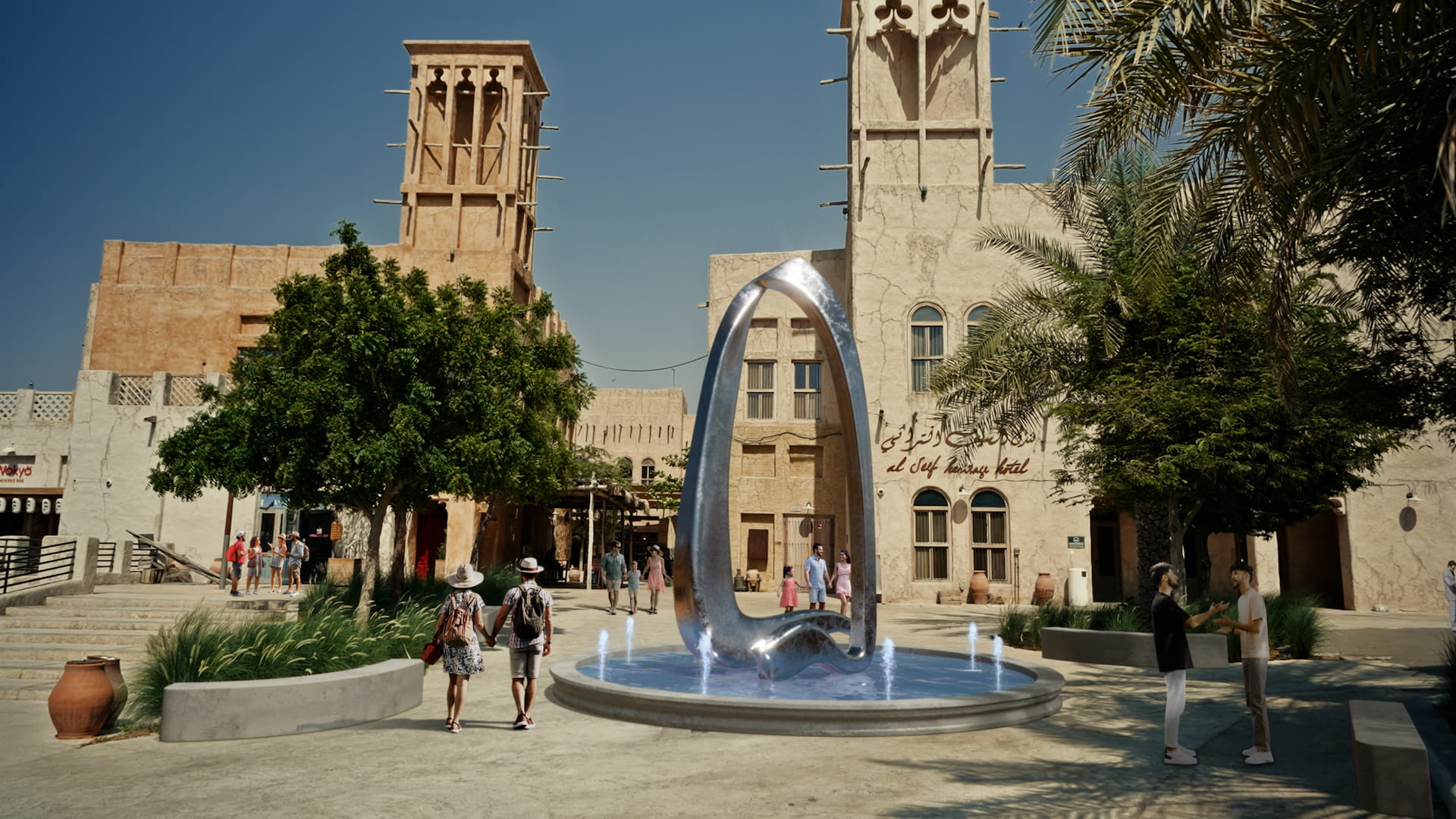
The project also includes the rehabilitation of 10 artistic spaces. RTA will coordinate with Dubai Culture and Arts Authority, with the participation of Emirati artists, to showcase a diverse range of artworks, including murals and sculptural installations. This will be complemented by the application of advanced architectural lighting techniques that highlight the area’s history and cultural identity.
Joint initiatives between the two entities will further activate the walkway and revitalise the surrounding spaces through continuous artistic programmes and seasonal events following the completion of the project.
Pedestrian Master Plan
It is worth noting that the Pedestrian Master Plan includes the development and enhancement of more than 6,000 km of walkways, forming a seamless and interconnected network across the emirate. The first phase of implementation is scheduled between 2025 and 2027, with subsequent phases to be delivered progressively from 2027 through to 2040.
The plan also provides for the construction of 110 pedestrian bridges and underpasses to strengthen urban connectivity. Key components include a pedestrian bridge on Al Ittihad Street linking Al Nahda and Al Mamzar, a bridge on Tripoli Street connecting Al Warqa’a and Mirdif, a bridge on Al Khawaneej Street linking Mushrif and Al Khawaneej, and a bridge on Dubai–Al Ain Road connecting Dubai Silicon Oasis and Dubailand.
The project further supports comprehensive connectivity between key destinations, public facilities and various modes of transport, while reinforcing the distinctive identity and artistic character of walkways through area-specific design concepts. This is reflected in the use of diverse forms, colour schemes, lighting elements and landscaping features, enabling pedestrians to experience a clear transition from one district to another.
Walkway design prioritises enhancing the pedestrian environment through the integration of complementary urban elements that contribute to the overall beautification of the city. These include intensified planting and shading along walkways, the introduction of misting systems to mitigate heat, and provision of interactive walkways incorporating digital screens, signage, ground graphics, and recreational and fitness equipment that encourage both residents and visitors to walk.
The project also provides rest areas and designated commercial investment spaces, ensures barrier-free access to walkways, and enhances pedestrian safety standards. In addition, it introduces a high-quality wayfinding system distinguished by innovative ground markings, directional signage, sustainable lighting solutions, integrated pavements and public art installations. The walkways will also be integrated into navigation systems and smart applications.
More on these topics
Most Recent News

UAE Gender Balance Council showcases the UAE’s experience at RISE 2026 conference in Belgrade

MBRSG launches ‘UAE Model Research Centre’



 For an optimal experience please